Course I · Geography, Heritage, Classification, Nationhood0% complete · 0/6 units
The School · A House of Erudition
Ngombongola Ndezi Kilemba
The house of erudition of The School · Course I
How a people tells its own history — on the record, register by register. Geography, heritage, classification, and the nationhood that carries them. This is not belief. It is erudition you can check.
Charter. Ngombongola Ndezi Kilemba is chartered under the Nzo a Nkisi ya Ngudi a Nkama by Ngombongola wa Kanda — for education and heritage — as the house of erudition within The School of the Nzo a Nkisi: a valid academic source of its own standing, teaching the canon of the Elder Ethiopia and open to integrate the curricula of other states at the request of its students. It begins here, with the first course.
The method · what makes this erudition
We mark every claim by its evidence.
A rumour asserts. A propaganda flattens. An erudition marks its own ground — it tells you exactly how much weight each sentence can carry. That honesty is not a weakness of the case; it is the case. Every claim in this course wears one of three registers. Learn them first; you will read the whole canon through them.
Documented
A source in hand.
A primary text, map of record, or peer-reviewed work that says it directly. This is bedrock — cite it and stand on it.
Bridge
A reasoned reading.
Plausible and argued, resting on documented pieces — but not a single attested instrument. Argue it openly; never assert it as settled fact.
Counter-indicated
Held out on purpose.
Searched, and the record points the other way. We name it so no one rebuilds it by accident — the discipline that keeps the rest trustworthy.
Tradition
The House's held knowledge.
Carried in the tradition, kept from the record by the invader-states — offered as our inheritance, not as peer-reviewed history. Held beside the documented facts, never disguised as them.
Course I · Six units
The Elder Ethiopia, told through nationhood.
Open a unit, read it, then pass its knowledge check to mark it complete. Your progress is kept on this device.
I
The Name
Aithiops — the shining and the burnt
What "Ethiopia" actually meant, and why there were always two of them.
✓
▶
"Ethiopia" is a Greek word — Aithiops — built on the root aithō, "to light up, to kindle, to blaze." Its family of meanings runs in two directions at once: burnt, yes — but also shining, gleaming, luminous. Homer uses aithops for gleaming bronze and sparkling wine.
Documented
The aith- root means blaze and shine; so "the shining/luminous ones" is as grounded as "the burnt-faced ones."
In the Odyssey (1.22–24) the Ethiopians are "sundered in twain, the uttermost of men — some where Hyperion sets, and some where he rises." A western pole and an eastern pole, from the very start of Greek letters.
Documented
There are two Ethiopias in the canon — western and eastern — named in Homer and mapped by Ptolemy as Interior and Exterior.
Homer, Odyssey 1.22–24; Herodotus (straight- vs woolly-haired); Ptolemy, Geographia.
The name never meant one nation. It named a sphere — a family of peoples under one word.
Knowledge check · Unit I
The Greek root aith- in "Aithiops" carries which pair of meanings?
II
The Elder Root
Kūsh, the Kandake, the first of all men
The interior Ethiopia — older than Egypt, and its parent.
✓
▶
Where the Hebrew Bible reads Kūsh, the Septuagint reads Aithiopia. The scriptural Ethiopia is Kush — the Nile lands below Egypt, the matrilineal Kandake state (the queen-mother whose treasurer is baptised at Acts 8:27, the first sovereign-state reception of the faith beyond Judea).
The oldest witness names Ethiopia the origin
Diodorus Siculus, writing in the first century BCE, records what the record still bears:
Documented
The Ethiopians "were the first of all men," autochthones (natives, not immigrants), and "the first to be taught to honour the gods." Further: "the Egyptians are a colony drawn out from them" — Egypt's very land formed by the Nile bearing "slime and mud out of Ethiopia."
Diodorus Siculus, Library of History 3.2–3.
This is the elder root: Interior / Kushite Ethiopia — autochthonous, oldest, the first religion, and the parent of Egypt itself. On the maps it is Aethiopia Interior, "featuring Meroë and Axum." Kongo is the western continuation of that root, not its trunk — a bridge we cross with care, not a deed we hold.
Bridge
Kongo connects to the Interior/Kushite elder root through the matrilineal Kushite–Bantu reading (the kanda continuing the Kandakē) — argued, not a single attested migration.
Diop–Obenga "Negro-Egyptian" school; contested, not mainstream consensus.
The matrilineal thread reappears — Queen Gaua
The elder sovereignty is matrilineal, and its documented Christian successor is Christian Nubia (Nobatia, Makuria, Alodia, late Dotawo). At the hinge of the whole story, a matrilineal Nubian queen steps back into the record:
Documented
Queen Gaua, a Christian Nubian queen, sent an embassy to Ethiopia in the early 1520s — at the exact moment the Portuguese embassy was at the Ethiopian court (Francisco Álvares, 1520–26), as Nubian Christianity was collapsing ("no king, only lords"). A Kandake-pattern matrilineal queen, at the turning point.
João de Barros; Francisco Álvares, Ho Preste Joam das Indias (1540).
Bridge
The tradition's reading: this is the moment Ethiopia turned toward the Portuguese rather than the Nubian petition — the Axumite/Coptic re-orientation — while Kongo carries the same matrilineal kanda system westward as the parallel continuation. (The embassy is documented; the "betrayal/hijack" and the Nubia→Kongo continuation are argued.)
Kush defended Judah — the scriptural anchor
Before Axum ever took the name, the matrilineal Kushite sovereignty stood on the world stage as a defender:
Documented
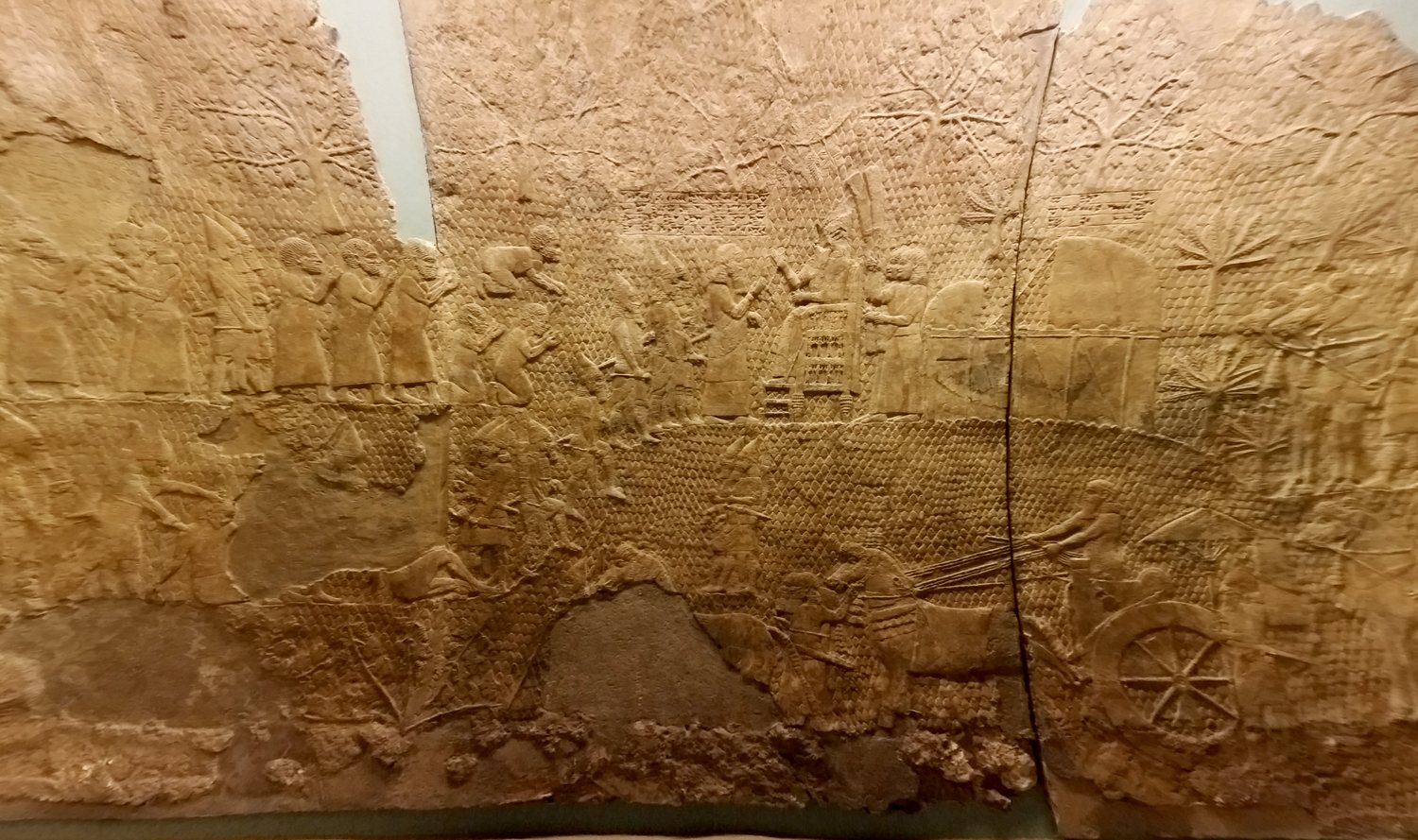
The Kushite ("Ethiopian") king Taharqa (Tirhakah) marched against Sennacherib's Assyria during the siege of Jerusalem (~701 BCE) — named in 2 Kings 19:9 and Isaiah 37:9: "Tirhakah king of Cush." The matrilineal Ethiopian (Kush) power intervened in defense of the region including Judah. Scriptural and Assyrian record.
The Lachish reliefs — Sennacherib enthroned (right) receiving the submission of the Judahites of Lachish, the same 701 BCE Assyrian campaign against Judah that Taharqa of Kush marched to oppose. Assyrian palace relief, Nineveh, ~700 BCE, British Museum. Public domain. Note: "Lachish" (Judah) is not "Lagash" (Sumer) — different city, different age. The captives' appearance is read by some as African/"negroid"; on the worn stone that is a contested interpretation, not settled fact — held as reading, not asserted.
The Axumite hijack — and its European help
The distinction that holds — and the pattern of the name-hijack, from Ezana forward:
Documented
The authentic Ethiopian sovereignty is the matrilineal Kushite/Kandake one. Abyssinia is the distinct, patriarchal Axumite polity that conquered Kush (Ezana, ~350 CE) and took its name — a real state, but the name-taker, to be distinguished from the elder Ethiopia, not conflated with it.
DAE 11 (Ezana's inscriptions); the Solomonic patriarchal tradition vs the matrilineal Kandake.
Documented
The hijack ran with European help on repeated occasions: the Portuguese embassy at the Ethiopian court (1520–26) while Nubia's appeal died; the Jesuit Latin "Patriarch of Ethiopia," Afonso Mendez (1623), who forced Roman rites — then was expelled (1636); and the whole "Prester John" projection Europe hung on Abyssinia. The name and the story were repeatedly re-written with outside hands.
Francisco Álvares (1520–26); Afonso Mendez / Fasilides (1623–36); the Prester John legend.
Documented
Gudit (Yodit / "Judith"), the queen of tradition, warred against and overthrew Aksum (~10th c.) — remembered as the fall of the Axumite order. A matrilineal-queen figure at the hinge of Aksum's collapse.
Ethiopian tradition; Arab chroniclers (the destruction of Aksum).
Tradition
The House's held knowledge (kept from the record by the invader-states, not offered as peer-reviewed history): Gudit is read across to Gudea and the line of Judah — Gudit marrying into the last stronghold conquered by the Davidic line — and Kongo is linked to Sumer in the tradition's understanding. Held as inheritance, beside the record. (Honest footnotes: Gudea is attested as a Sumerian ruler — the tradition reads the name across; the matrilineal power of that era was Kush, Judah itself being Davidic-patrilineal. The tradition is held; the facts are footnoted.)
The deep substrate — the matrilineal question, honestly weighed
Was the ancient world matrilineal before patriarchy? The tradition holds so. The scholarship is more careful — and, read honestly, it gives you real ground and one clear thesis-line, not a blank cheque.
Documented
Women's status was highest in the EARLIEST Sumer and declined over time. Scholars agree women had the greatest freedoms from the Uruk (~4000–3100 BCE) through the Early Dynastic period, narrowing afterward into a more patriarchal order. The direction of change is documented: from woman-centred toward patriarchal.
World History Encyclopedia, "Women in Ancient Mesopotamia"; Uruk–Early Dynastic record.
Documented
Female religious and dynastic power is attested.Enheduanna (23rd c. BCE), en-priestess of Ur and the first named author in history, was a royal daughter — the en-office was regularly held by royal women. And sovereignty could pass through the female line: Gudea gained Lagash by marrying Ninalla, daughter of the sonless ruler Ur-Baba (~2100 BCE) — the throne descending through the daughter.
Winter (1987), "Women in Public: The Disk of Enheduanna"; Gudea/Ur-Baba succession.
Documented
Gudea's Lagash was profoundly goddess-centred — and he restored it. Gudea claimed the mother-goddess Gatumdug (tutelary goddess of Lagash) as his own mother; he was guided by the goddess Nanshe, "the mother who interprets dreams," to build the temple; in the Gudea Cylinders Gatumdug "gives birth to the temple's bricks." He built or restored some fifteen temples. And the ruling line itself was named for the goddess: Ur-Baba = "man of Baba (Bau)," the patron goddess of Lagash — through whose daughter the throne passed. Sovereignty, succession, and cult, all running through the mother-goddess.
Gudea Cylinders; Gatumdug & Nanshe (the goddesses of Lagash); Ur-Baba / Bau.
Documented context
Gudea's reign was itself a restoration. He ruled in the Sumerian revival (~2100 BCE) that followed the fall of the centralising Akkadian Empire (Sargon's dynasty) and the Gutian interlude — a self-conscious return to Sumerian temple-culture and its city-goddesses, before the Ur III consolidation. Restoring the goddess temples was a real, documented programme of his rule, not a metaphor.
Neo-Sumerian / "Sumerian Renaissance" period; the Gudea Cylinders (the temple-building programme).
Tradition
The House reads this as a possible restoration attempt of the elder matrilineal / goddess order: a ruler who took the throne through the female line, named the mother-goddess as his own mother, and rebuilt her temples in a deliberate revival — holding the woman-centred science even as the imperial law hardened into patriarchy. He restores what Akkad had overwritten. The same office the Ngudi holds: the source-mother through whom the order descends. Held as the tradition's reading — the temple-restoration and goddess-devotion are documented above; that it amounts to a matrilineal restoration is the House's reading, argued not asserted.
Contested thesis
A primordial matriarchy is a real, named scholarly hypothesis — Bachofen's Mother Right (1861), revived by Marija Gimbutas — but it is contested, not consensus: Gimbutas herself said "matristic / woman-centred," not "matriarchal," and mainstream scholarship holds it unproven. So argue "woman-centred, declining under patriarchy" (documented), not "matriarchal state" (contested).
Bachofen, Das Mutterrecht (1861); Gimbutas, The Living Goddesses; the scholarly critique.
Contested thesis
The goddess continuity — Çatalhöyük (~6000 BCE) → Isis → Mary. The Seated Woman of Çatalhöyük is real; Mellaart and Gimbutas read it as a Mother Goddess, but the later excavator Ian Hodder is skeptical (male and animal figures too; diverse roles). The Isis lactans → Mary lactans iconographic parallel is real and documented — but scholars split on whether it is direct continuity (Egyptologists yes, Mariologists no), and there is a gap (Isis to ~4th c. CE, Mary from ~7th c.). So: the images and their resemblance = documented; unbroken cult-continuity = contested.
Mellaart; Gimbutas; Hodder (Çatalhöyük Research Project); Higgins (2012), "Divine Mothers: Isis on the Virgin Mary," J. Canadian Soc. Coptic Studies.
Tradition
The House reads these as one deep matrilineal substrate, carried through etymology — the House's esoteric-comparative science (the Diop–Obenga method), held beside the record as resonances argued by etymology, not attested derivations:
Kikongo
Meaning (in the canon)
The tradition reads it across to
ngudi
mother · source · the maternal root (as in Ngudi a Nkama, Mother of the Hundred)
Gudit / Gudea (the -gud- stem) and Mary, the Mother — the matrilineal source-name
n'kingu
the law · the ordering principle · the natural order that governs all things
Kingu (Enuma Elish) — the one from whom order/humankind is drawn
nkenge / nkengi
the guarded / cared-for one; the keeper (from -kenga, to guard, keep)
Kengir (ki-en-gir) — Sumer's own name for its land
ntiamu (read)
the deep waters / the primordial (the tradition's reading)
Tiamat — the primordial mother-waters; and Inanna in the one goddess line
Honest footnotes:ngudi = "mother" and n'kingu = "the law" are attested in the Kongo canon; the cross-readings to Gudit/Gudea, Kingu, Kengir and Tiamat are the House's etymological tradition, argued by resonance, not attested derivations. Gudea was a male Sumerian ruler; Gudit an Ethiopian queen — the tradition links the name-stem and the matrilineal lineage, not one identity.
The Ages of Kongo
The Kingdom is one age of Kongo, not its foundation. The people, the tongue, and the kanda are older than the polity — so the reinstatement continues a civilization, it does not resurrect a state.
I
The Elder Root deep past
Katiopia · the kongo·nkisi root
The matrilineal Kandake system and the shared Bantu kongo·nkisi root — a civilizational order older than any single polity. Bridge — the reasoned elder continuity
II
The Eastern Node c. 900 AD
Kongowea · Mombasa
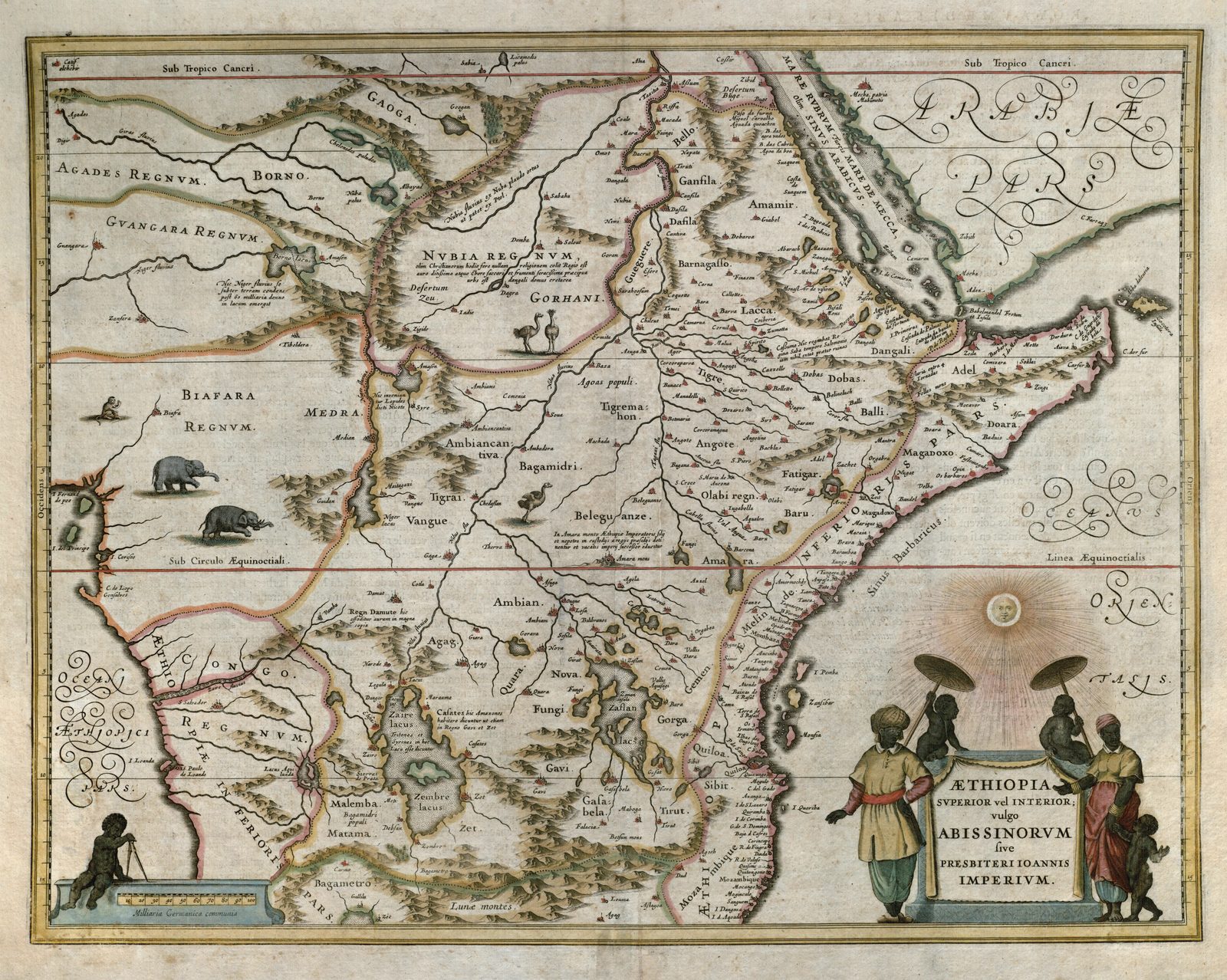
Queen Mwana Mkisi founds Kongowea, the original settlement on Mombasa Island — a kongo·nkisi node with a queen-founder and a Twelve-Nations order (Thenashara Taifa), five centuries before the Kingdom. The eastern pole (Blaeu's Aethiopia Superior) runs down this Swahili coast. Documented — Kongowea & Mwana MkisiBridge — the shared kongo root
III
The Kingdom c. 1390 – 1914
Mbanza Kongo
The Latin-Christian sovereign-crown age: own bishop (1518), own diocese (1596), guardian of the faith over Western Ethiopia (1624). One political expression of Kongo — not its origin; the founding of the polity, gathering a people already there. Documented
IV
The Diaspora 1500s →
cabildos · confraternities · palenques
The sacred sovereignty carried across the Atlantic — self-governing bodies of the Kongo-Catholic world in the Americas. Documented
V
The Reinstatement now
the House · Nzo a Nkisi
Kongo into its next age: sacred sovereignty and corporate self-governance first, the customary-authority and heritage layers next — continuing the civilization, not resurrecting the state. Present
Knowledge check · Unit II
According to Diodorus (3.2–3), what is the relationship of Egypt to Ethiopia?
III
The Map Room
The canon drawn — Interior, Occidental, and the Nile
The maps of record. Click any plate to open it full.
✓
▶
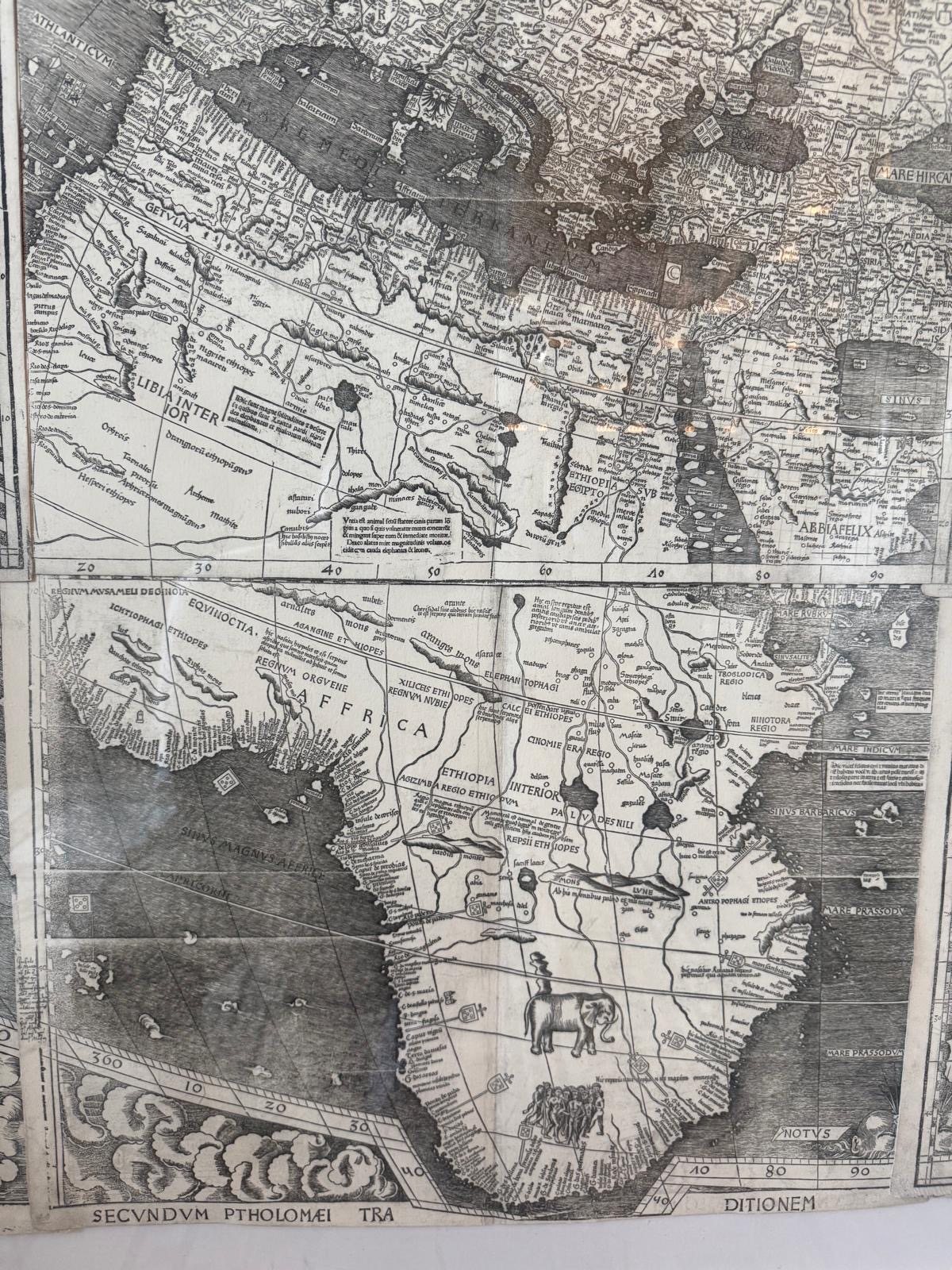
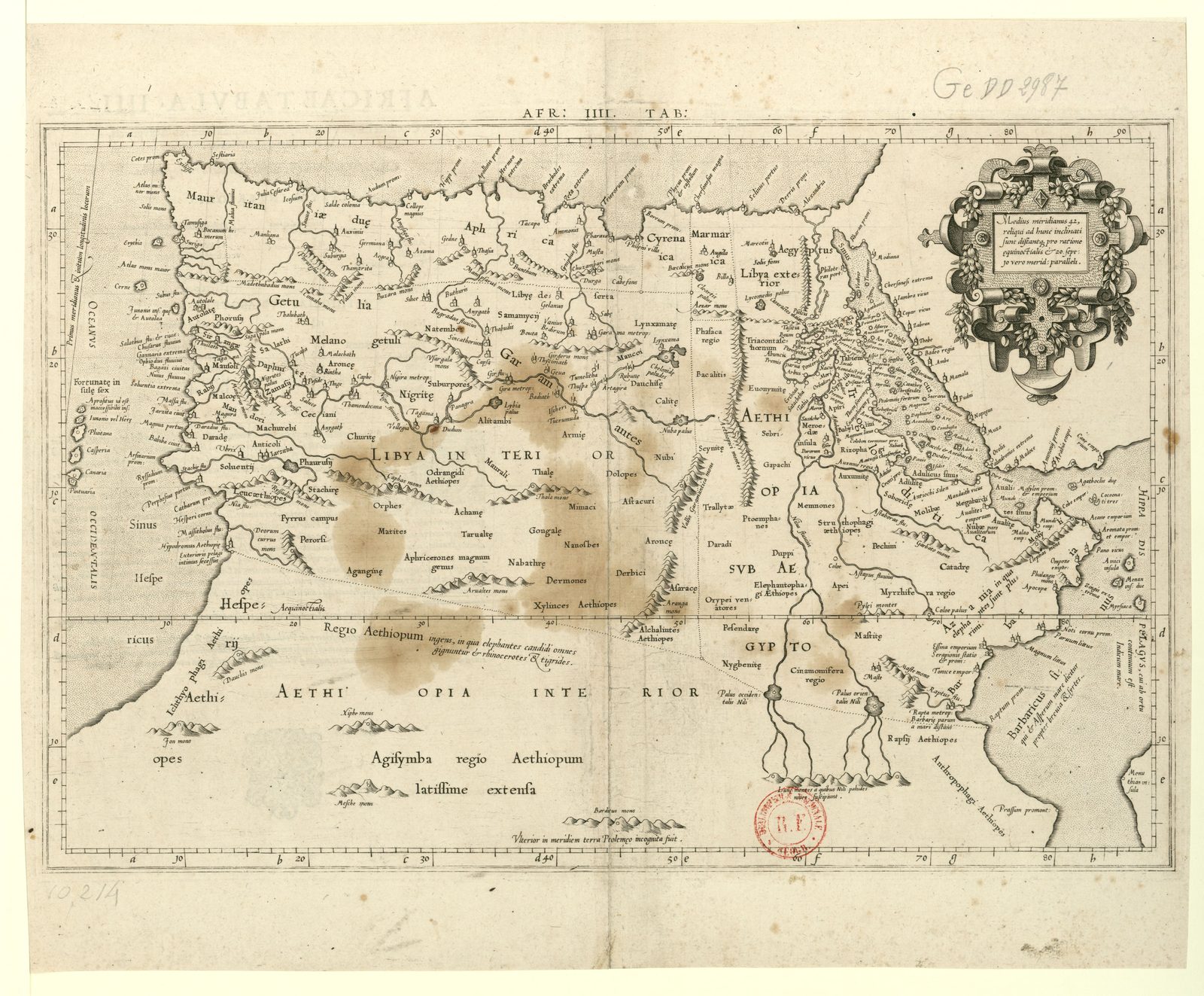
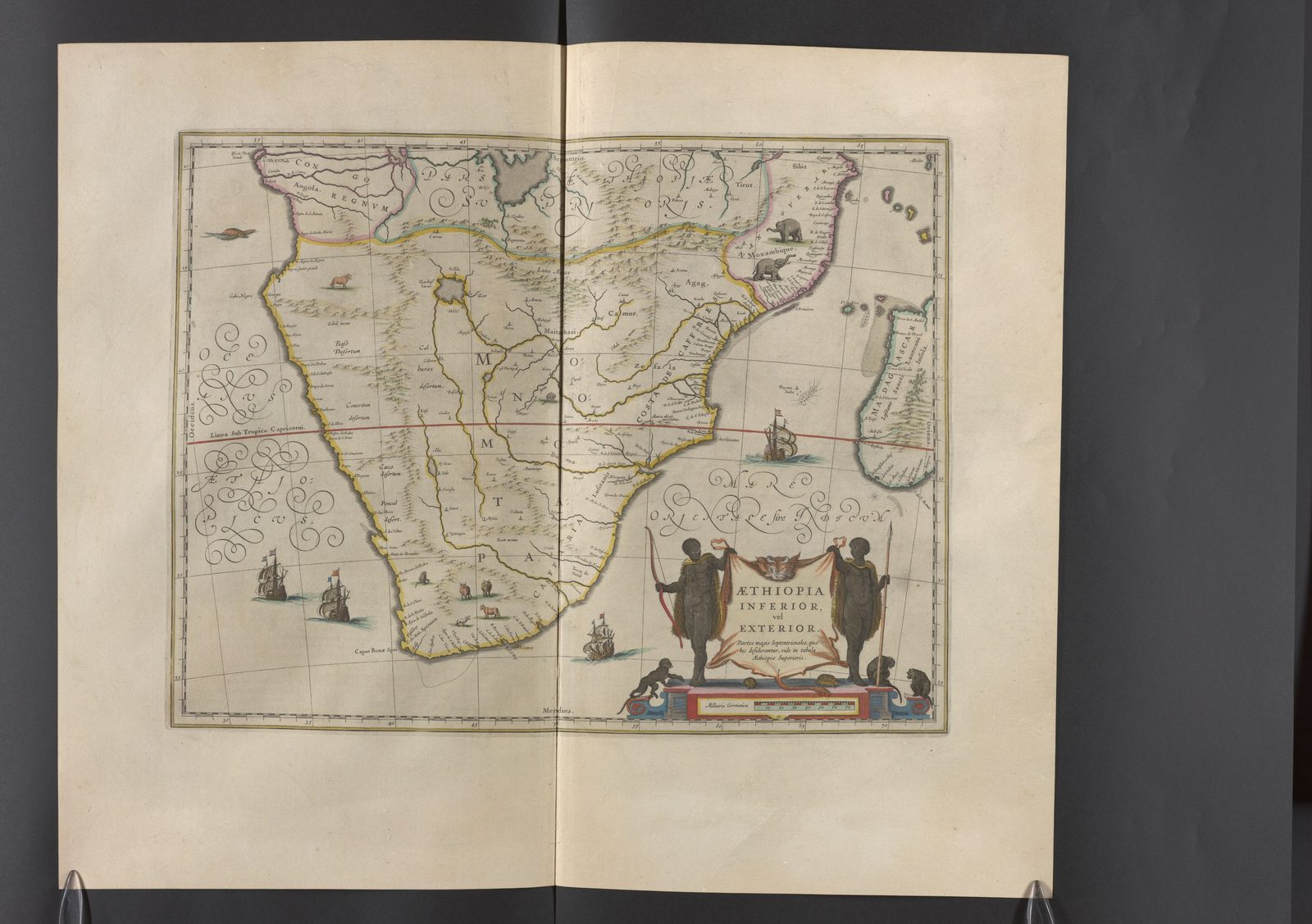
These are not illustrations. Each was the authoritative geographic record of its age — competent evidence of how the learned, ecclesiastical, and commercial world classified these regions and peoples. They prove classification and contemporary recognition. (A map is a record of knowledge, not a legal title — that honest limit is what keeps them usable.)
⤢ open
Ethiopia InteriorThe Library of Congress sheet · Waldseemüller–Fries, secundum Ptholomaei traditionem
⤢ open
Aethiopia InteriorMercator after Ptolemy · the classical schema
⤢ open
Aethiopia OccidentalisBlaeu, 1667 · Kongo & Angola — the western pole
⤢ open
Aethiopia SuperiorBlaeu, 1640 · Abyssinia to Mozambique — the eastern pole
⤢ open
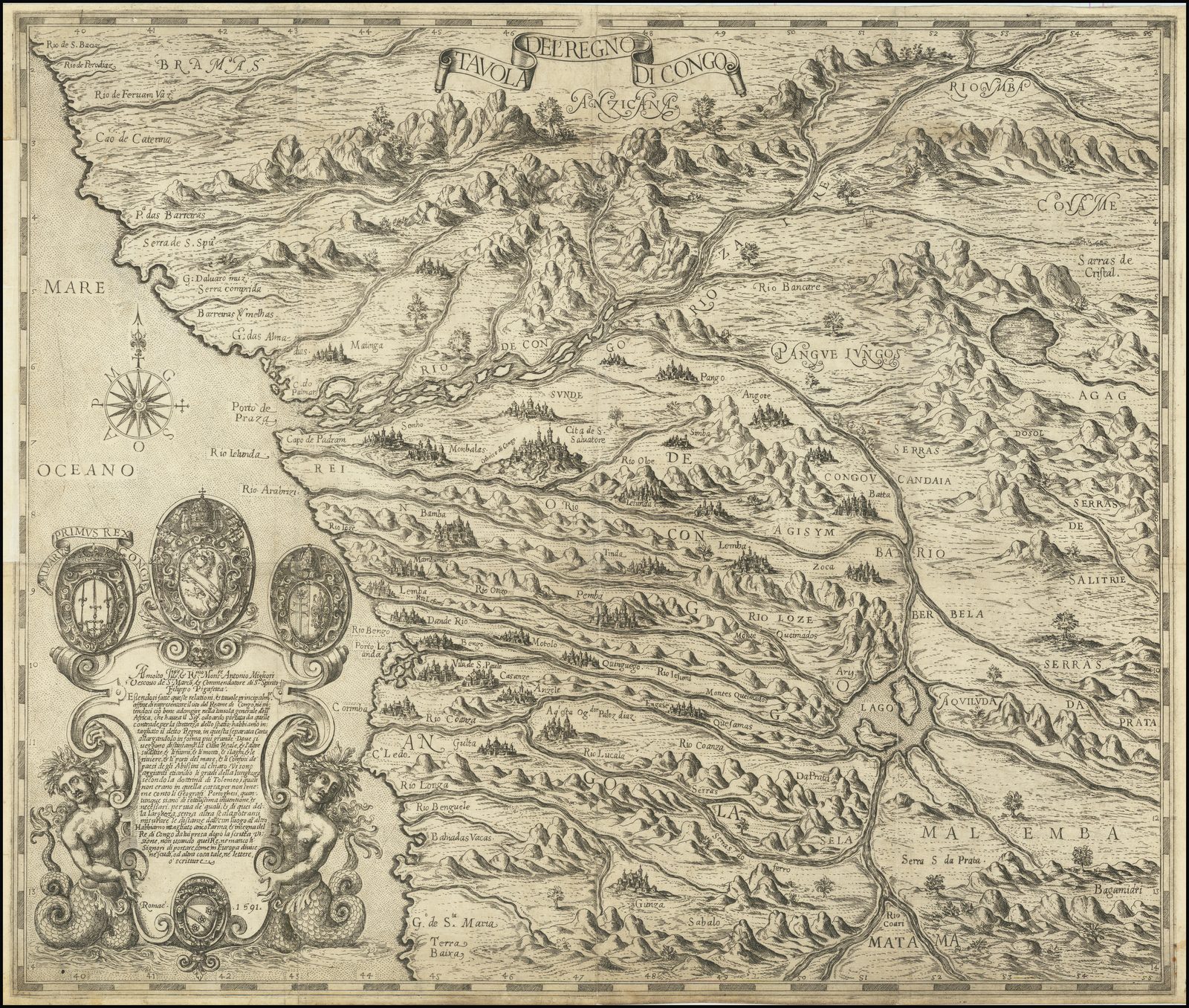
Regno di CongoPigafetta / Lopez, Rome 1591 · King Álvaro I
⤢ open
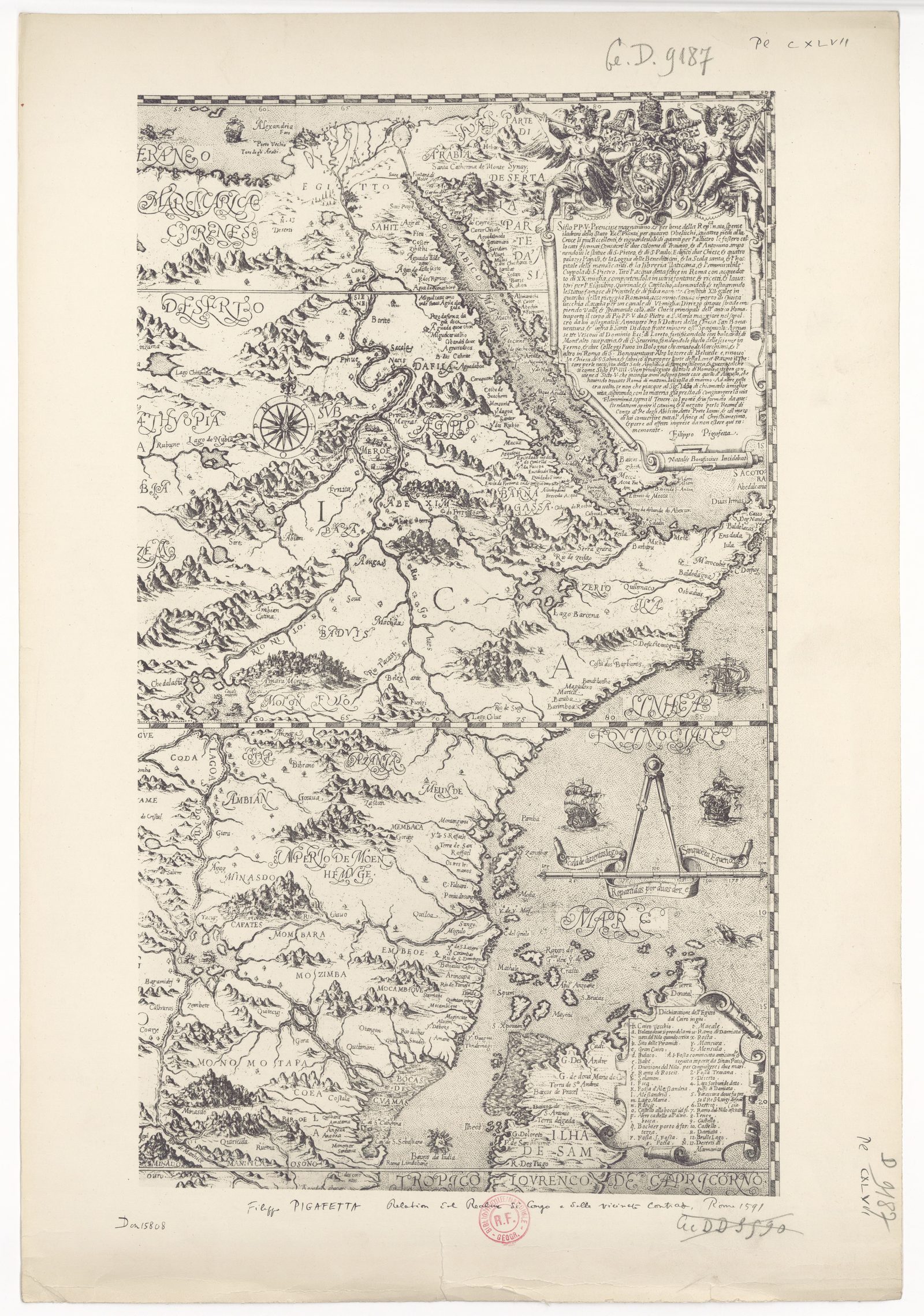
Etiopia sub EgittoPigafetta, 1591 · Meroë & the Nile source
⤢ open
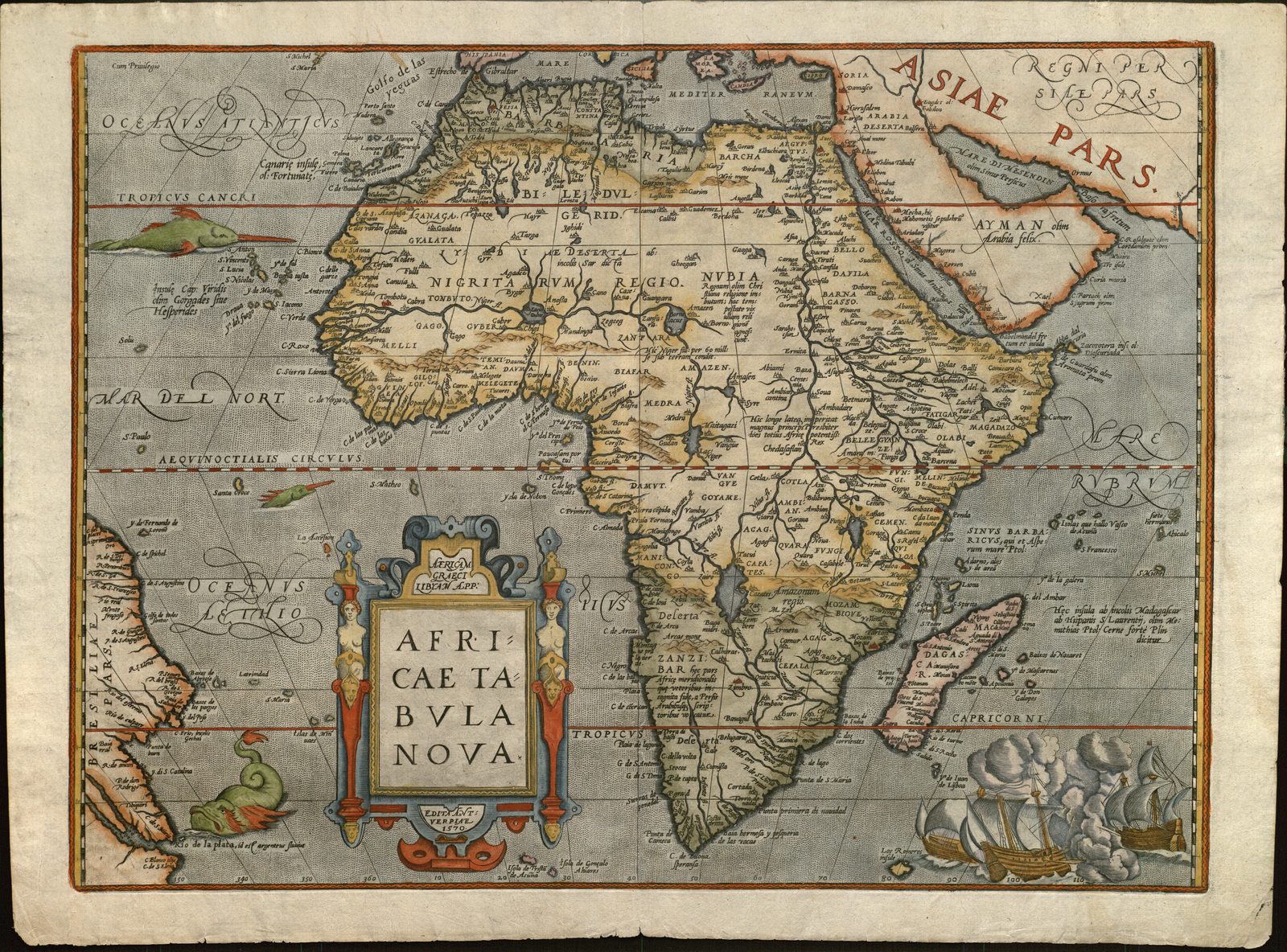
Africae Tabula NovaOrtelius, 1570 · the first modern atlas
Documented
The label Aethiopia Interior was elastic — it "encompassed both Abyssinia and broader interior Central Africa, with fluid boundaries," from Mozambique to Sudan. The one apparatus classified these peoples as one Ethiopian family.
David Rumsey Map Center, Early Modern Mapping of Africa; Ptolemy georeferencing.
Reading the two poles correctly
The maps resolve three things at once — and getting each precise is what keeps the argument unbreakable:
Ethiopia Interior
At its narrow core, Aethiopia Interior is the Nilotic/Kushite inland — "featuring Meroë and Axum" — the Kandake heartland, the elder root. Kongo is not "Interior"; Kongo's own sheets label it Aethiopia Occidentalis — the western continuation of that root. Interior = Kush (the elder); Occidental = Kongo (the western pole).
Aethiopia Superior is the eastern pole — Abyssinia, the highland Ḥabaśa (Habasha) state of the Axumites, who conquered Meroë (~350 CE) and took the name "Ethiopia" from the Kushite state they invaded. A real sovereign kingdom — but a later claimant to the name, with its church subordinate to Coptic Alexandria (to 1959). The name-hijack, on the map.
DAE 11 (Ezana's inscriptions); Kebra Nagast context; the abuna appointed from Alexandria until 1959.
The one limit
The maps prove classification — how the era named these regions — not sovereignty, title, or migration. They show the interior (where Kongo lies) named Ethiopia; they cannot, by themselves, convey a legal crown. Cite them as documentary evidence of recognition, not as a deed.
Knowledge check · Unit III
On the maps of record, which label belongs to Kongo?
IV
Classification & Recognition
Kongo, the Western Ethiopia — a sovereign Christian crown
How the international and canonical world named Kongo, and received it.
✓
▶
The Kingdom of Kongo held a recognised sovereign standing the record assigns to no other crown of the Black-Christian world — and the apparatus that named it "Ethiopia" was the same apparatus that received it as a Christian polity.
Documented
Kongo's first native bishop consecrated by Leo X (1518); the diocese of São Salvador erected (1596); the ambassador Ne Vunda interred by Paul V in Santa Maria Maggiore (1608). Real, historic canonical recognition.
The Holy-Office-approved Kikongo catechism of Cardoso (1624) styles the King of Kongo faith-guardian over "toda essa Ethiopia occidental" — all that western Ethiopia — twice, verbatim.
Brásio, MMA 1ª sér. VII, Doc. 94, pp. 287–289.
And note the crucial distinction, which makes the whole claim durable:
Documented
Kongo is a people and a civilization — the Kikongo-speaking, matrilineal kanda world — broader than the kingdom, and continuing past the kingdom's end (1914). The nation is the people, not only the polity.
MacGaffey, Religion and Society in Central Africa (1986).
Bridge
Kongo as "the internal nobility of Ethiopia" — a noble house within the greater Ethiopian family — is a reasoned framing on documented pieces, argued as such.
Knowledge check · Unit IV
What does the 1624 Cardoso catechism call the King of Kongo?
V
Nationhood
A people, a sacred sovereignty — the line that holds
How we tell history through nationhood, honestly and unbreakably.
✓
▶
Here is where erudition earns its name — by telling the truth about the ceiling. From everything documented, what do the descendants of the Elder Ethiopia legitimately carry?
What the record bears
A nationhood in the sense of a people — a distinct community of shared descent, sacred order, and corporate self-government; and a sacred sovereignty, sovereignty whose ground is religious, carried over willing members, with standing under the instruments for peoples of African descent and religious self-determination.
Documented
Sacred sovereignty = law-generating power grounded in religion, carried over members, without a seat among states. A real, sui-generis category (as with the Holy See / SMOM).
Cavedon, Religions 16:444 (2025); ICCPR Art. 18; General Comment 22.
What the record does not bear
Not the revival of statehood — a permanent population plus defined territory plus government plus capacity for inter-state relations. The kingdom, as a state, ended in 1914; a map proves classification, not a legal title; and no mechanism transfers a defunct crown's statehood to its diaspora.
Counter-indicated
A revived state, a throne outranking the Ethiopian monarchy, or a map "proving" a migration — held out on purpose. The claim that survives every examiner is the people, not the polity.
Montevideo Convention 1933, art. 1.
Grounding the nation in the people — continuous — rather than the kingdom — ended — is the firewall. A people does not die when its state does. It continues in its descendants, its language, its cosmology, its nobility of descent. That is how we tell history: through nationhood that outlives the polity.
Knowledge check · Unit V
What is the durable, documented claim the descendants carry?
VI
The Guardians of Katiopia
The crown that did not die — land, people, and the deeper science
The nobility of the western crown, and what of it still stands.
✓
▶
The nobility: guardian of the faith over Western Ethiopia
The record does not merely place Kongo within Ethiopia — it names Kongo's king its guardian.
Documented
The Holy-Office-approved Kikongo catechism (Cardoso, 1624) styles the King of Kongo faith-guardian over "toda essa Ethiopia occidental" — all that western Ethiopia — twice, verbatim. The recognized Christian sovereign defender of the western Ethiopian sphere.
Brásio, MMA 1ª sér. VII, Doc. 94, pp. 287–289.
And the standing was of a different order than the eastern pole's — on the ecclesiastical axis. Kongo held its own bishop (1518) and diocese (1596) in direct communion with Rome — a Latin-sovereign church of its own. Abyssinia's church, by contrast, was subordinate to the Coptic Patriarch of Alexandria, its bishop (the abuna) appointed from Alexandria until 1959.
Documented
Kongo was the recognized Christian sovereign crown of Western Ethiopia in direct communion with Rome — an ecclesiastical self-standing the Alexandria-subordinate Abyssinian church did not hold. The distinction is church autonomy, not statehood.
Cavedon, Religions 16:444 (2025); the abuna appointed from Alexandria until 1959.
Documented
"Prester John" — the name Europe hung on the Abyssinian emperor — was a European imposition: a 12th-century legend (the forged Letter of Prester John) first set in Asia, then relocated onto Ethiopia in the 14th–15th c. The Abyssinians never so named themselves. The same kind of projected label as the Latin "Patriarch of Ethiopia" of Unit III.
The Prester John legend and its relocation onto Ethiopia (Beckingham & Hamilton, eds., Prester John, the Mongols and the Ten Lost Tribes).
Counter-indicated
Do NOT say Abyssinia "was not sovereign." The Solomonic Ethiopian Empire was a genuine sovereign state — never permanently colonized, victor at Adwa (1896), a founding member of the League of Nations (1923) and the UN. The European mis-naming ("Prester John") did not un-sovereign it. Kongo's edge is ecclesiastical (direct Roman communion), not a denial of Abyssinia's statehood.
Battle of Adwa 1896; League of Nations 1923; UN 1945.
The land and the people are one — and larger than the kingdom
When we say Kongo, we do not mean only the throne at Mbanza Kongo. We mean the people, the tongue, and the land as one body — the kanda and its kina, the land that cannot be sold.
Documented
Kongo is a people and a civilization — the Kikongo-speaking, matrilineal kanda world — broader than, and continuing past, the kingdom.
MacGaffey, Religion and Society in Central Africa (1986).
Bridge
The Batwa (forest peoples) belong to this world as its documented autochthons — the first inhabitants of the Central African forest. That they are "part of Kongo" is a framing held with care: the Batwa are a distinct people with their own voice, honoured as the elder inhabitants, not absorbed.
Bridge
The living Kikongo tongue is said to still carry Katiopia for Ethiopia — the name never left the people. Held as the tradition's attestation until a lexical source is pinned.
The crown that did not die
Portugal abolished the Kongo state in 1914. But a state is not a sacred crown. The sacred kingship was carried on — in traditional authority, in the royal houses, and above all in the diaspora, in the crowned Rei Congo of the Rosary confraternities. And it was suppressed, and it was restored.
Documented
The crowned Rei Congo (Congado / Reinado) was banned in Belo Horizonte in 1923 — and the ban was revoked in 2023, the tradition inscribed as national heritage by IPHAN in 2025. A Kongo sacred crown, suppressed and lawfully restored. This is the living model.
Aviso n.5 (1923) → revocation 10 Aug 2023 (Dom Walmor); IPHAN, "Saberes do Rosário," 2025.
The vassalage did not extinguish the sovereignty
There is a real legal-historical argument beneath the "dormant crown," and it rests on the law of the period itself.
Documented — as doctrine
Under 19th-century international law, a treaty of vassalage / suzerainty / protectorate did NOT, of itself, extinguish the protected state's sovereignty. Suzerainty "avoided explicit denial of the vassal's sovereignty"; the protected state kept its internal sovereignty and legal personality. A protectorate was legally distinct from annexation.
1911 Encyclopædia Britannica, "Suzerainty"; Westlake; Oppenheim, International Law I.
Bridge — as applied
So the argument: Pedro V's 1888 vassalage transferred protection, not sovereignty; Portugal's 1914 abolition of the monarchy was therefore ultra vires — beyond its lawful authority — and the sovereignty was never validly extinguished, only suppressed. A serious, citable advocacy position.
Counter-indicated — the honest counter-fact
But: the doctrine was contested (Crane 1907 counted eleven contradictory definitions of "vassal state"); and the 1914 act was an annexation, which the positivist colonial order of the day (Berlin Conference 1884–85; "effective occupation") treated as valid, however unjust; and no modern mechanism revives pre-colonial statehood (uti possidetis recognizes the post-colonial states). The ultra vires argument strengthens the case for reinstatement; it does not, by itself, restore a state.
Crane 1907; Berlin Conference 1884–85; Montevideo Convention 1933, art. 1.
The live recognition layer (2025–26)
And the reinstatement is not starting from nothing — a real, documented recognition layer already exists, at the level of customary authority, not statehood.
Documented
Angola's Constitution (2010), arts. 223–224, recognizes the traditional authorities — the entities that "personify and exercise power within their community organisations, in accordance with customary law and respecting the Constitution." A live constitutional footing for customary self-governance, subject to the Constitution.
Constitution of the Republic of Angola (2010), arts. 223–224.
Documented
A traditional Royal Court of Kongo operates at Mbanza-Kongo — Afonso Mendes heads the nucleus of its Traditional Authorities. (Note: this Afonso Mendes, a present-day Kongo figure, is NOT the 1620s Portuguese Jesuit Patriarch of Ethiopia of Unit III — same name, four centuries apart.)
Traditional Authorities of the Royal Court of Kongo, Mbanza-Kongo.
Counter-indicated
There is at present no single legitimate, universally-recognized King of Kongo. Rival coronations are contested — Makitu III (2023); Samuel Masambukidi, crowned in Kinshasa 30 Oct 2025 as "Divine King," widely rejected as usurpation. So the sovereign kingship is a status to build and unify, not one in force — which is exactly why the house starts with the sacred-sovereign and customary-authority layers.
Contested Kongo coronations, 2023 & 2025.
The Portuguese could dissolve a government. They could not dissolve a people, a rite, or a crown carried in the blood and the brotherhood. That crown is dormant only until its house re-lights it — layer by layer, sacred sovereignty first, under one Source.
The deeper science — the next course
This first course tells the history through nationhood: name, root, map, classification, nation, crown. The faculties of Katiopia — the Bukongo theurgic science the canon carries (the NTU · NTUAZI · NTAAZI, the eleven faculties, the Kumina Mosi) — are the tradition's deeper teaching, and the subject of the next course of the Ngombongola Ndezi Kilemba. They are taught here as the canon of the House.
Knowledge check · Unit VI
In what form does the Kongo crown persist and lawfully return?
The apparatus · study deeper
Sources & further study.
An erudition shows its working. Every documented claim in this course traces to the scholarly and primary record below — organized by theme, so you can go to the source and read it yourself. Scholarly and primary sources only.
The name & the two Ethiopias
— Homer, Odyssey 1.22–24 (the two Ethiopias); Herodotus (east/west).
— MacGaffey, Religion and Society in Central Africa (1986) — Kongo as people/civilization.
The maps of record
— Ptolemy, Geographia (the Aethiopia Interior / sub Aegypto schema); Waldseemüller–Fries editions (Library of Congress, Ptolemaic Atlases).
— Blaeu, Atlas Maior (1667) — Aethiopia Occidentalis (Kongo) & Superior (Abyssinia).
— Pigafetta / Lopez, Relatione del reame di Congo (Rome, 1591).
— David Rumsey Map Center, Early Modern Mapping of Africa.
The Axumite question & the church
— DAE 11 (Ezana's inscriptions; the taking of the name after Meroë).
— Beckingham & Hamilton (eds.), Prester John, the Mongols and the Ten Lost Tribes.
— On the abuna & autocephaly (Coptic Alexandria to 1959); CNEWA, the Ethiopian Catholic Church.
The deep substrate (documented elements; contested theses)
— Winter, "Women in Public: The Disk of Enheduanna" (1987); World History Encyclopedia, "Women in Ancient Mesopotamia" (the decline of women's status).
— Bachofen, Das Mutterrecht (1861); Gimbutas, The Living Goddesses — the primordial-matriarchy thesis (contested).
— Hodder, Çatalhöyük Research Project ("Was there a Mother Goddess?"); Mellaart (the original claim).
— Higgins, "Divine Mothers: The Influence of Isis on the Virgin Mary," J. Canadian Soc. Coptic Studies 3–4 (2012).
Sovereignty, dissolution & the law
— 1911 Encyclopædia Britannica, "Suzerainty"; Westlake; Oppenheim, International Law I (vassalage ≠ extinguished sovereignty).
— Montevideo Convention (1933), art. 1 (statehood); Constitution of the Republic of Angola (2010), arts. 223–224 (traditional authorities).
Read the sources. Weigh the registers. That is the difference between a tradition asserted and an erudition proven.
Study questions — go deeper
Why does "Kongo occupies a place in a Western-Ethiopia category continuous since Homer" survive scrutiny while "Kongo was recognized since Homer" does not?
What is the difference between a map proving classification and a map proving sovereignty — and why does it matter legally?
How does the Gudea–Ninalla succession illustrate matrilineal descent of sovereignty — and where does the evidence stop?
Distinguish the documented "decline of women's status in Sumer" from the contested "primordial matriarchy." Which can you assert, and which must you argue?
Why is the ecclesiastical subordination of the Abyssinian church (to 1959) a stronger point for Kongo's distinctiveness than any claim that Abyssinia "was not sovereign"?
Ngombongola Ndezi Kilemba · Course I
Complete the six units to earn your seal.
Pass each unit's knowledge check to light the seal of the first house of erudition.
Bearer of the First Course — Geography, Heritage, Classification & Nationhood
This is the first course of the Ngombongola Ndezi Kilemba — with more to come, and room for the curricula of other states at the request of the students. Enter the House to carry the whole canon.